
Infrared, Neuroscience and Eastern Medicine: Why the Head-Out Sauna Works
Sauna is one of the most studied lifestyle interventions in modern health research. Long-term population studies have linked regular sauna use with significantly lower rates of cardiovascular disease and all-cause mortality — in some groups, approaching a 50% reduction compared with minimal use.
So yes: heat matters.
But most sauna conversation stops at outcomes. It rarely asks the more useful question:
How does the brain experience heat — and what changes when we stop heating the control centre?
Because the brain isn’t just another tissue being warmed. It’s the command centre that decides whether this experience lands as recovery… or as another stressor.
The neuroscience lens: thermoregulation and the “heat experience”
Your body can tolerate a lot of heat. Your brain is less negotiable.
It’s temperature-sensitive, energy-hungry, and designed to protect itself first. The moment you enter a heat environment, the hypothalamus (your internal thermostat) takes control — shifting sweating, circulation, breathing rate and heart rate to keep your core stable and your brain within a safe band.
This is where sauna experiences split.
If heat rises quickly around the head and airway, the nervous system can read it as pressure rather than comfort. Heart rate can climb faster. Breathing can tighten. Some people feel foggy, dizzy, headachy, or that subtle sense of “push”.
Not because something is wrong with you — because the nervous system is doing its job.
And that matters, because the nervous system isn’t just reacting. It’s deciding.
The brain decides whether heat becomes a therapeutic signal… or a threat signal.
The missing point in most sauna culture
A lot of sauna culture is built around endurance: staying longer, going hotter, proving something.
But recovery doesn’t require performance. It requires safety.
If your system has to brace to get through the experience, you may still get physiological benefits — but you’re doing it with one foot on the accelerator. That’s when heat stops feeling restorative and starts feeling like another stressor disguised as self-care.
So the real question becomes:
Can we warm tissues deeply, without forcing the brain into defence?
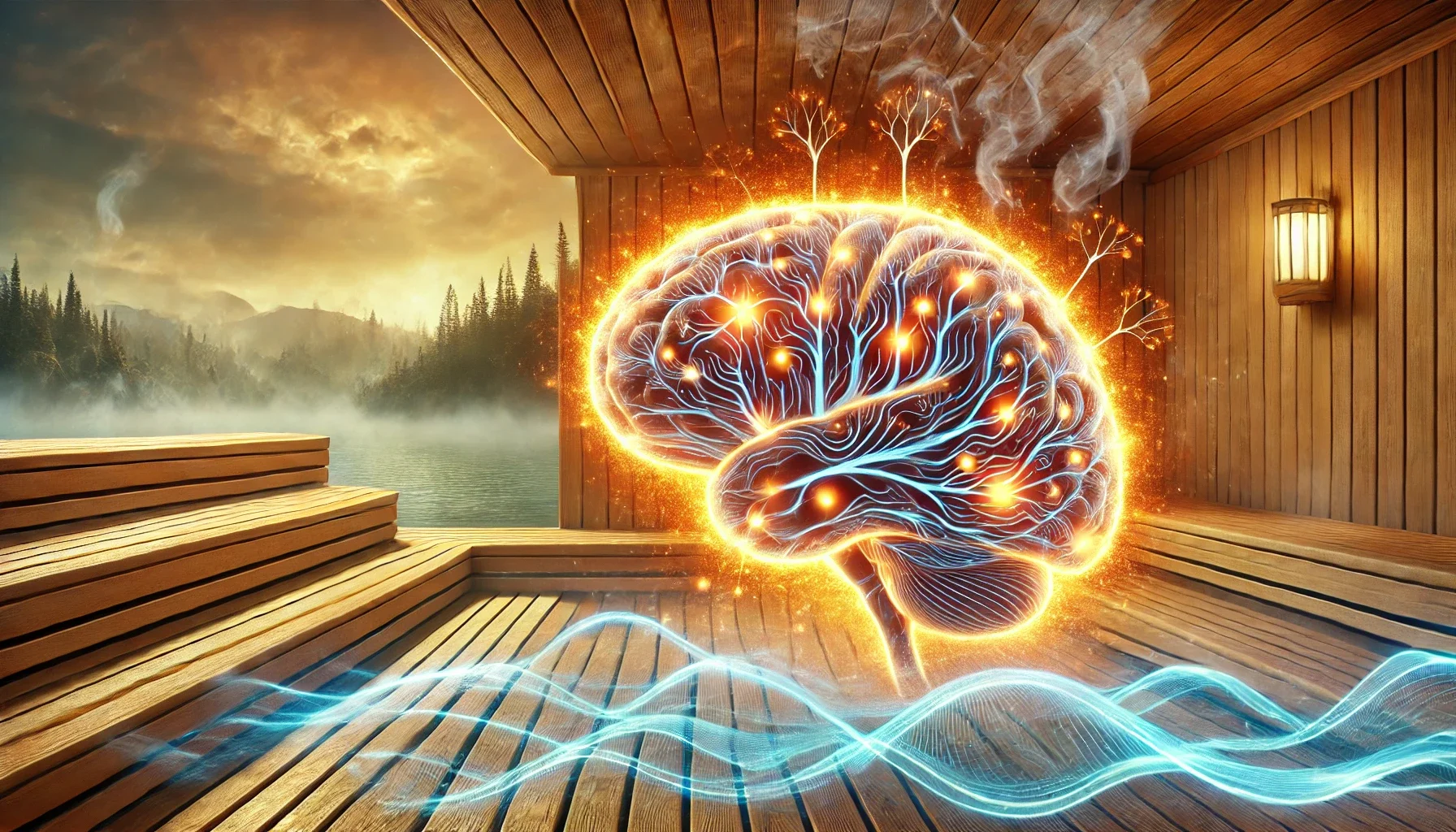
The eastern medicine lens: an old rule about protecting the head
Long before modern thermoregulation models, eastern medical systems were paying close attention to this exact issue.
In Ayurveda, heat therapy (svedana) is used to soften tissue, support circulation, and encourage elimination — but the head and sense organs are typically protected. The body is warmed deliberately, while the head is kept cooler or outside the chamber.
The logic is clean:
warm the tissues
protect the control centre
Japan sums up the same principle in one simple phrase: zukan sokunetsu (頭寒足熱) — “cool head, warm feet”.
Different frameworks, same practical takeaway: keep the head clearer and the body can receive heat without bracing.
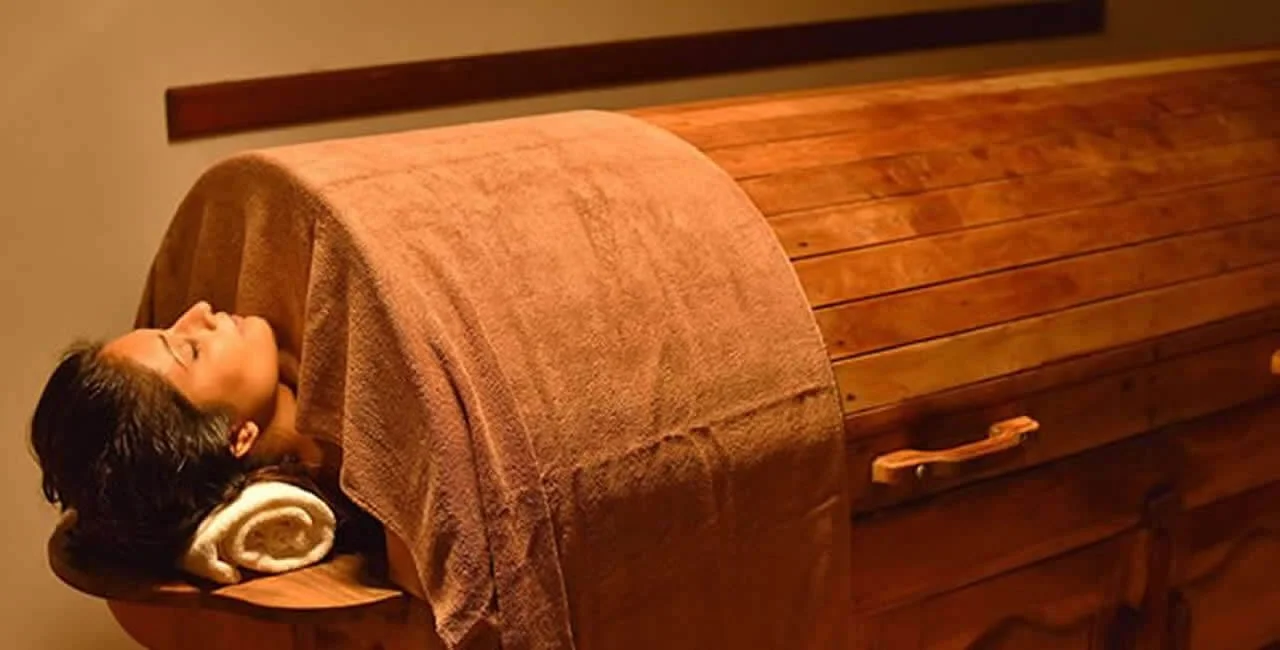
The infrared lens: changing how we deliver heat
Traditional saunas heat the air to high temperatures and rely on that hot air to warm the body over time.
Infrared works differently. It warms tissues more directly — muscles, fascia, joints, blood vessels — while the surrounding air can remain more moderate. Your core still warms. Circulation still increases. The cardiovascular and thermoregulatory systems are still engaged.
But the route in is different:
less about punishing ambient heat
more about deep, even tissue warming
For many bodies — especially those already living with chronic stress, fatigue, hormonal shifts, or persistent tension — that difference can be the difference between:
“I survived 15 minutes and needed a nap,”
and
“I feel properly warm, looser, and clear afterwards.”
Now bring the three lenses together:
a brain that doesn’t want to overheat
an older wisdom that says “keep the head out”
a technology that warms tissue without needing extreme air temperatures
That overlap is exactly what Solāis is built around.
Why Solāis chose a head-out design
When I designed Solāis, I didn’t want another “prove you can handle it” sauna.
Most people who come through the door are already carrying a lot — demanding work, caring responsibilities, health concerns, background stress that never quite switches off. Their nervous systems don’t need another environment to endure. They need a space where the body can stop defending and start recovering.
That’s why Solāis is built around a head-out infrared sauna pod — currently the only set-up of its kind in Scotland.
In this pod:
your body is enclosed in deep, even infrared heat
your head and airway stay outside the chamber in calmer air
On paper, it looks like a small design choice. In lived experience, it changes the entire conversation between heat and the nervous system.
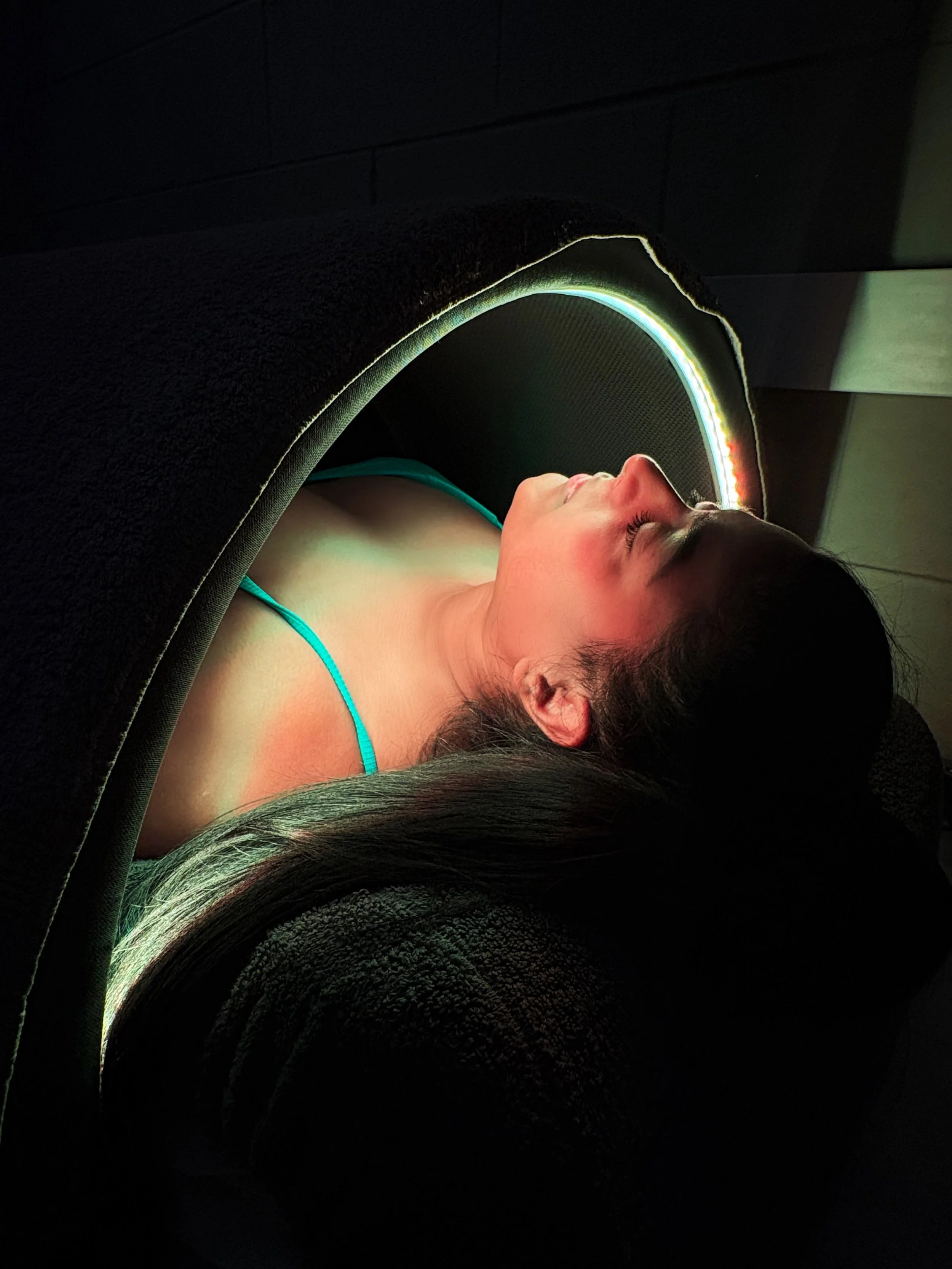
What the head-out experience tends to change
When infrared is paired with a head-out design, several things typically shift:
breathing stays easier and more natural
heart rate rises more gradually instead of spiking
the brain carries less thermal load
the nervous system has a better chance of staying closer to parasympathetic balance (rest, digest, repair)
People often describe leaving the pod feeling:
genuinely warm through the muscles
looser, less clenched
mentally clearer
calmer in a way that doesn’t feel fragile
This isn’t about making sauna “softer” or diluting benefits. It’s about making heat usable — especially for bodies already carrying a high cumulative load from stress, poor sleep, hormones, and life.
When the brain isn’t firefighting, the rest of the system can actually respond.
Nervous-system-led heat: what clients notice
People don’t leave Solāis talking about “smashing” a heat round. They talk about the after:
a sense of settling, like the internal pace drops
muscles that feel less defensive
a clearer head rather than post-sauna fog
a deep calm that holds through the evening, sometimes into the next day
For many, it’s not just “relaxing”. It’s the rare feeling of being warm, safe, and unrushed inside their own body.
The structure of the session helps. The design of the pod does the rest.